Strategy as craft. Built, not theorized.
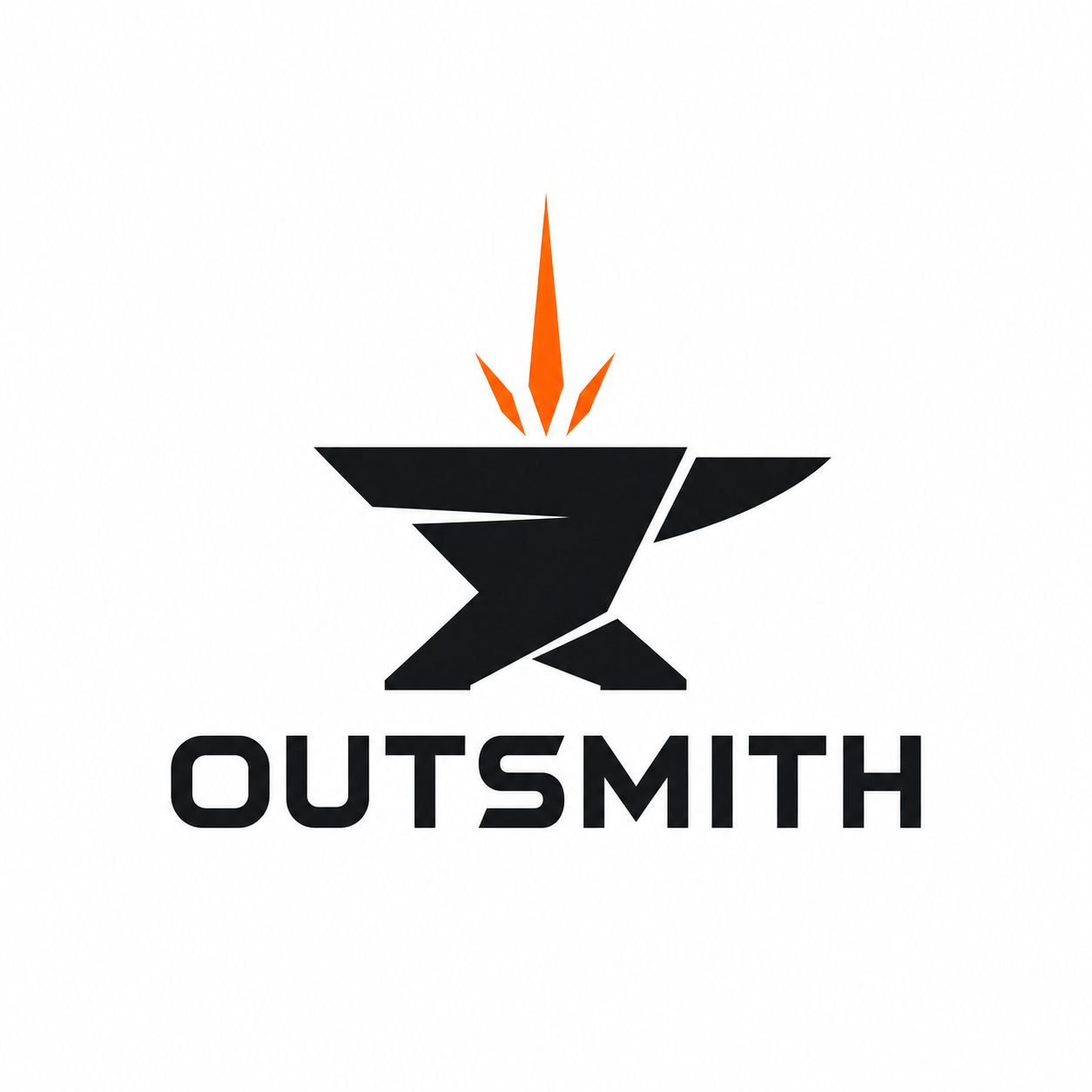
A blacksmith’s anvil is the surface where raw material becomes a finished tool. It’s patient, exact, and physical. The “Smith” half of Outsmith is the craftsperson — and this mark leans all the way into that idea.
The orange spark rising from the anvil is the heat of real work happening. Not a deck. Not a slideware framework. The strike of metal on metal.
“We’re operators, not theorists.”
Your positioning gets forged in the room with us. Then we hammer it into a real marketing system that ships. No focus groups, no thought-leadership theatre, no deck-ware. We build with our hands.
This direction signals substance-over-fluff. It promises the client that they’re hiring people who do the work, not people who hand off a strategy doc and disappear.
Best For
- Founders who want to lead with operator-coded identity
- The “we’ve sat in your chair” promise to multi-location operators
- Audiences that distrust pure consulting brands and respond to craftsmanship
- Marketing Stack Build as the hero product (the built deliverable)
Watch Outs
- Most literal of the six — could read as blue-collar/trade rather than strategic
- Risk of being mistaken for a metalworking, knife-making, or industrial brand
- Less compatible with high-ticket strategic engagements that need to feel like McKinsey-grade work
- Iconography is strongly associated with masculine/heritage brands — check fit with target buyer demos
Forged language and operator stories.
This mark sings next to phrases like “hammered into shape,” “built in the room,” “forged with operators,” and case studies that document the actual craft of the work — the workshop sessions, the hands-on stack build. Pairs naturally with Hormozi-style operator brand voice, founder-led content, and behind-the-scenes process content.